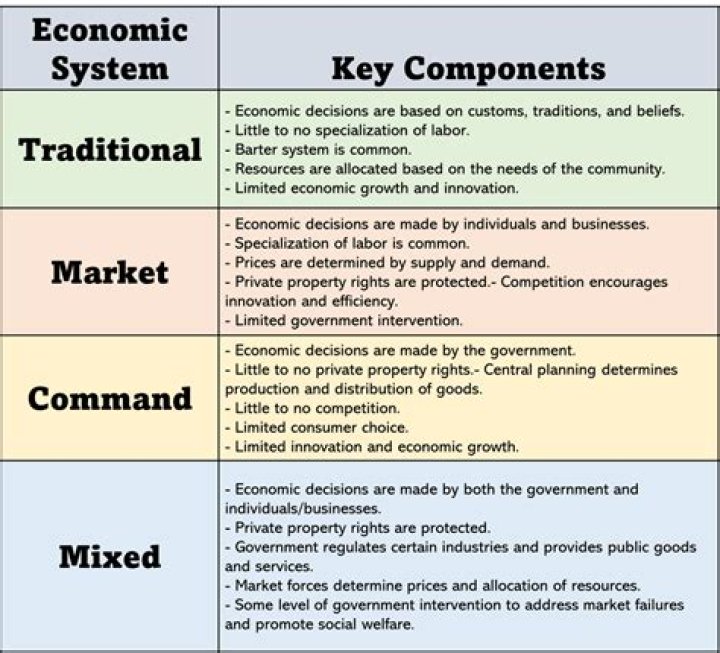
Following are the functions of economic institution which include Social stratification, Power and authority, Interdependence of other Institutions, Needs satisfaction, Employment, Division of Labor and Provision of funds.
What are the economic institutions in the society?
Well-established arrangements and structures that are part of the culture or society, e.g., competitive markets, the banking system, kids’ allowances, customary tipping, and a system of property rights are examples of economic institutions.
What is the role of institutions in society?
Institutions are a part of the social construction of a community, and define the way we interact with each other within society. They are determined by the cultures and values of that society, and provide order and stability within society (see Characteristics of an institution).
How do economic institutions affect society?
Among other things, economic institutions have decisive influence on investments in physical and human capital, technology, and industrial production. It is also well-understood that in addition to having a critical role in economic growth, economic institutions are also important for resource distribution.
What are the function of institutions?
Functions of Institutions: They simplify the actions and work of the individual. They provide a means to control society and people who constitute it. Every individual is assigned a role depending on which he can achieve and regulate his status. They help to maintain the order in society.
What are good economic institutions?
What are good institutions? When economists use this term, they mean: property rights, honest government, political stability, dependable legal system, and competitive and open markets. All of these institutions are crucial factors for economic growth.
What is the main function of a political institution?
Political institutions are organizations which create, enforce, and apply laws. They often mediate conflict; make (governmental) policy on the economy and social systems… Power is the ability of persons or groups to achieve their goals despite opposition from others.
What are the major institutions in society?
In shorthand form, or as concepts, these five basic institutions are called the family, government, economy, education and religion. The five primary institutions are found among all human groups.
What is the purpose of institutions?
An institution is a social structure in which people cooperate and which influences the behavior of people and the way they live. An institution has a purpose. Institutions are permanent, which means that they do not end when one person is gone. An institution has rules and can enforce rules of human behavior.
Why are economic institutions important to an economy?
Therefore, an accurate portrayal of economic institutions is constitutional in nature and defines how an economy is allowed to develop and function to achieve sustainability and growth.
What are the functions of institutions in society?
They simplify the actions and work of the individual. They provide a means to control society and people who constitute it. Every individual is assigned a role depending on which he can achieve and regulate his status. They help to maintain the order in society. They act as stimulants by giving the required freedom.
What are the functions of the economy as a social?
As a social institution, economy of a country must deal with equal distribution of wealth to alleviate poverty, ensure the provision of basic needs, ensure the provision of opportunites. As a social institution, govt starts many welfare programs to suppot poor people economically.
What are the roles of the economic system?
Other economic institutions, such as investment banks, play vital roles in the society, including providing fundraising advice, brokerage services, and selling and underwriting securities. Economic systems are instrumental in developing a community.